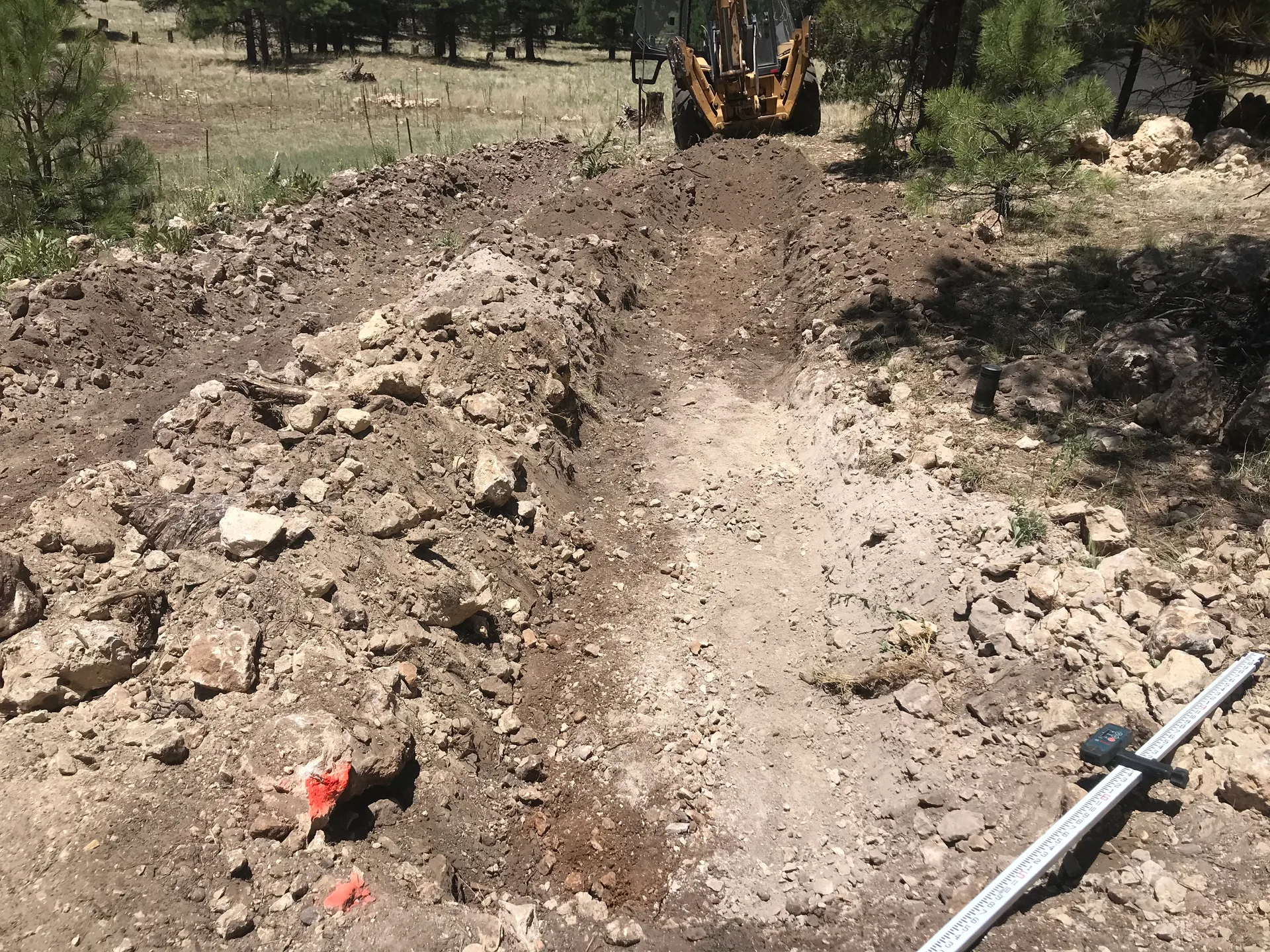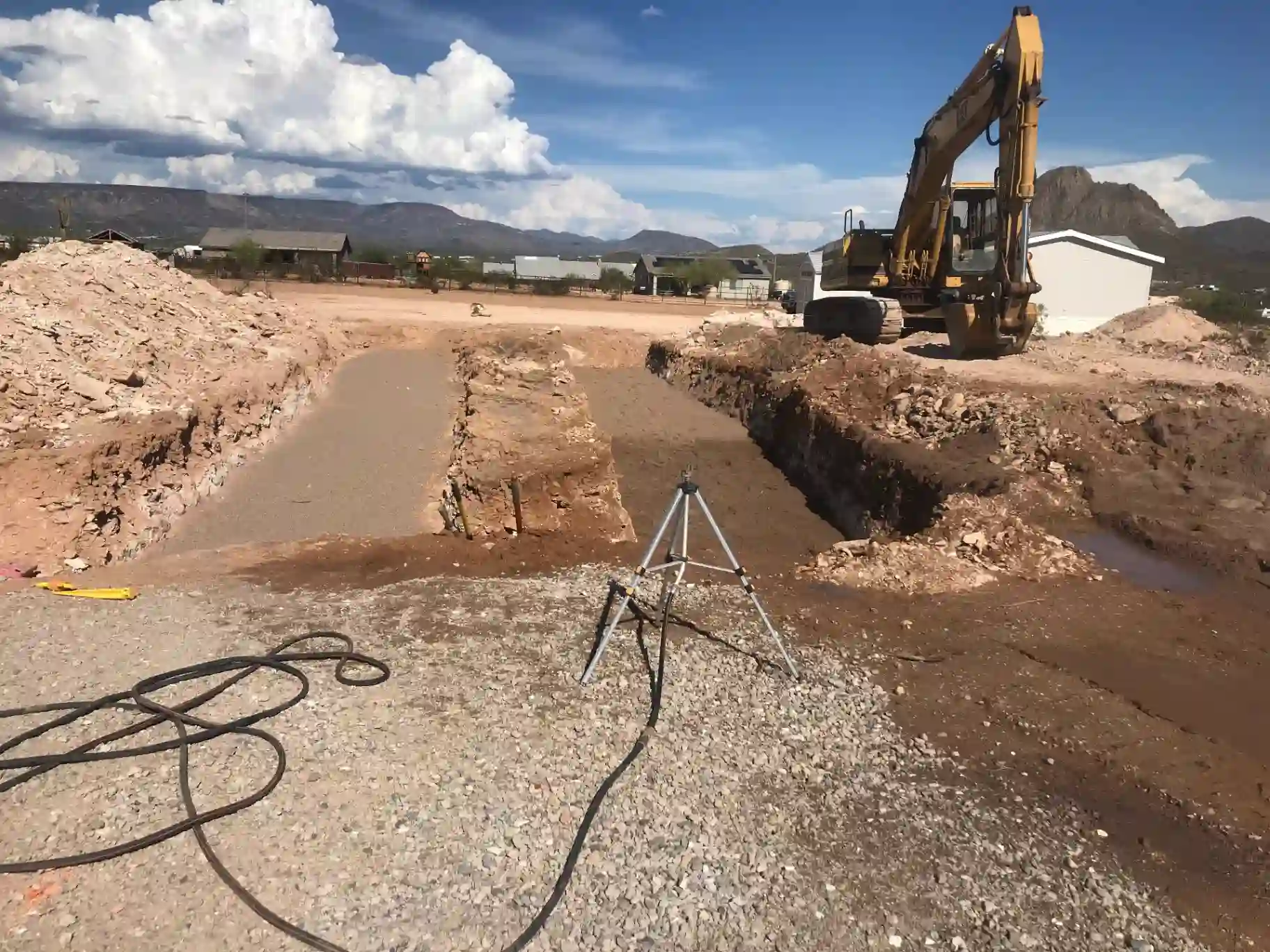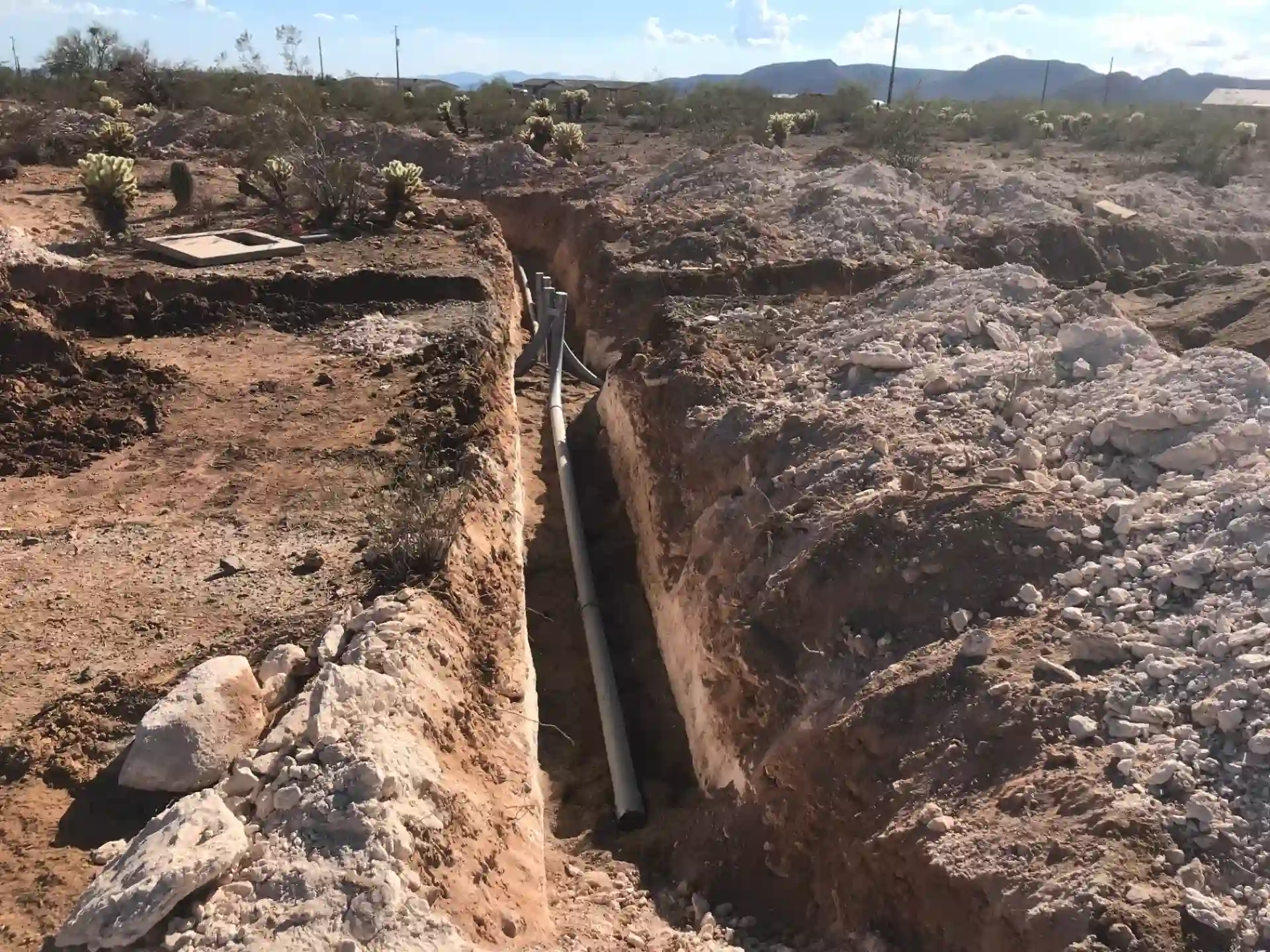
Grading Contractor Near Me: Why Phoenix Lots Need Proper Grading & Drainage Before Monsoon Season
Searching for a grading contractor near me before monsoon season? Here's what happens to a poorly graded North Phoenix lot, the warning signs to watch, and what a real fix looks like from an owner-operated excavation company Phoenix homeowners trust.
The First Monsoon Storm Doesn't Care About Your Landscaping
Every July, we get the same call. A homeowner in Anthem, Desert Hills, Cave Creek or the north edge of Phoenix watches the first real monsoon cell push through, then walks outside to find two inches of standing water against their foundation, a washed-out driveway, or a backyard that suddenly looks like a shallow pond. By the time they pick up the phone, the damage is already done: the soil around the footings is saturated, the AC pad has shifted, and the block wall is starting to lean.
Almost every one of those calls traces back to the same root cause: the lot was never properly graded, or the original grading has washed out over time. Monsoon season doesn't create drainage problems. It exposes them. This guide walks through what actually happens to a poorly graded North Phoenix lot during a monsoon, how to spot the warning signs before the next storm, and what a real fix looks like when you bring in heavy equipment and an owner who runs the machine himself.
What Monsoon Storms Actually Do to a Poorly Graded Lot
A typical Phoenix monsoon cell can drop three-quarters of an inch to more than two inches of rain in under an hour. Our desert soil (a mix of decomposed granite, sand, silt, and caliche) sheds water fast, resists absorption, and pools wherever the grade slopes toward a structure instead of away from it.
- Sheet flow: rainwater moves as a thin, fast-moving sheet across compacted desert soil, picking up decomposed granite and depositing it against walls, gates, and pool decks.
- Foundation saturation: standing water within 5 feet of a slab foundation soaks into the soil, expands clay layers, and can lift, crack, or heave concrete over multiple seasons.
- Caliche channeling: caliche layers under the surface are nearly waterproof, so once water hits caliche it runs sideways underground, often surfacing in unexpected places like garage floors and crawl spaces.
- Erosion of the finish grade: a lot that was properly graded when the home was built loses that grade over 10–20 years as landscaping, irrigation, and foot traffic reshape the surface.
6 Warning Signs Your Property Has a Grading Problem
If you see any of these on your lot before the next storm, don't wait. Grading problems compound quickly during monsoon season.
| Warning Sign | What It Means | Urgency |
|---|---|---|
| Water pools within 5 ft of the foundation after any rain | Negative slope toward the house, the most serious grading defect | Immediate |
| Decomposed granite piled against walls, gates, or the pool deck | Sheet flow is actively moving material across the lot | High |
| Cracks in stucco or block walls that widen after storms | Soil is expanding/contracting under the footing | High |
| Standing water in the yard 24+ hours after rain stops | Sub-surface drainage is blocked or the low point has no outlet | High |
| Erosion channels or ruts running across the yard | Uncontrolled sheet flow is cutting into the finish grade | Medium |
| Water stains on the garage floor or interior baseboards | Water is already reaching the structure, often via caliche channeling | Immediate |
Grading vs. Drainage vs. Trenching: What's the Difference?
These three terms get used interchangeably, but they solve different problems. Most lots that flood in North Phoenix need at least two of the three.
| Term | What It Does | When You Need It |
|---|---|---|
| Grading | Reshapes the surface of the lot so water flows away from structures and toward safe outlets | Any time the slope is wrong, missing, or has eroded |
| Drainage | Adds engineered features (swales, French drains, catch basins, dry wells) to move water off the lot | When there's nowhere for graded water to go, or when a large volume needs to move fast |
| Trenching | Cuts channels for buried drainage pipe, utility runs, or French drain gravel beds | Whenever a drainage solution requires an underground pathway |
How We Fix It: The Mitchell Excavating Process
When you hire an owner-operated crew, the person who quotes the job is the person running the skid steer, excavator, and laser. Here's how we approach a grading and drainage correction in North Phoenix:
- 1Site walk with the homeowner. We identify every low spot, every place water is entering or exiting the lot, and every structure at risk.
- 2Laser-based grade plan. We shoot elevations across the property and design a finish grade that pulls water at least 6 inches of fall in the first 10 feet away from every foundation.
- 3Cut and fill with heavy equipment. We move soil with a skid steer or mini-excavator, hauling in select fill where needed and removing spoil where the lot needs to drop.
- 4Drainage features. Swales, French drains, catch basins, and trenched pipe runs are installed to move water off the lot into an approved outlet.
- 5Compaction. Fill areas are compacted in lifts so the new grade holds instead of settling out during the first storm.
- 6Final grade check. We laser-check the finished surface, walk the lot with you, and confirm every drainage feature is flowing correctly before we leave.
Drainage Solutions for North Phoenix Lots
There is no single "best" drainage solution. The right answer depends on soil, slope, lot size, and where the water can legally go.
| Solution | Best Use Case | Desert Soil Considerations |
|---|---|---|
| Swale (graded channel) | Moving surface water across a yard toward the street or a low corner | Works well in decomposed granite; must be lined with rock in high-flow areas |
| French drain | Chronic wet spots, foundation perimeter, planter beds | Requires clean gravel + fabric; caliche layers dictate trench depth |
| Catch basin + buried pipe | Concentrated water from downspouts, patios, pool decks | Solid PVC preferred over corrugated in areas with heavy monsoon flow |
| Dry well | Lots with no legal outlet for water | Only effective where sub-soil actually percolates, many caliche-heavy lots do not |
| Trench drain (channel drain) | Driveways, garage aprons, courtyards | Must tie into a solid outlet; grate must be rated for vehicle loads |
Why Caliche and Desert Soil Change the Game
This is where a lot of out-of-state contractors get North Phoenix wrong. Caliche (the cement-like calcium carbonate layer under much of our soil) can start at 6 inches or 6 feet, and it can be an inch thick or several feet thick. It's harder than most people expect, and it changes everything about how water moves underground.
A French drain that would percolate perfectly in Ohio will sit as a bathtub in North Phoenix if it's cut into caliche without an engineered outlet. A dry well that works in sandy soil will overflow on the first monsoon in a caliche-heavy lot. This is why we don't quote drainage jobs from a satellite photo. We dig test holes, we see what's under your surface, and we design the fix around what your lot actually is, not what we wish it was.
And when we hit hard rock or unmarked utilities mid-dig, the owner is on-site to make the call. That's the difference between an owner-operated crew and a crew of subcontractors who have to phone home before they can make a decision.
Pre-Monsoon Homeowner Checklist
Walk your property before the next storm and check off what you can. Anything you can't fix yourself is worth a call.
- 1Confirm the ground slopes away from every wall of the house for at least 10 feet.
- 2Clear decomposed granite, leaves, and debris out of every swale and drainage channel.
- 3Verify every downspout discharges at least 6 feet from the foundation, not into a planter bed.
- 4Uncover and flush every catch basin and area drain on the property.
- 5Check the pool deck for negative slope back toward the house or the coping.
- 6Inspect block walls for new cracks, leaning sections, or eroded footings.
- 7Walk the driveway and garage apron, any dip that holds water is a monsoon problem waiting to happen.
- 8Photograph any low spots that hold water so you can show a contractor exactly what's happening.
- 9Confirm your lot's water actually has somewhere legal to go once it reaches the street or easement.
Frequently Asked Questions
How long does a residential regrading job take?+
Most single-family lots in North Phoenix take one to three days of heavy equipment work, plus a day for drainage features if they're part of the scope. Larger lots or lots with heavy caliche can run longer.
Will regrading kill my landscaping?+
Established trees and irrigation are protected wherever possible. We hand-dig around root zones and cap and re-route irrigation lines. Turf and small shrubs in the work zone usually have to come out and be replanted after the finish grade is set.
Do I need a permit for grading in Maricopa County?+
Most residential grading and drainage corrections that don't move significant volumes of soil or alter drainage onto neighboring parcels do not require a permit. Larger cuts, retaining walls, and any work in a floodplain or wash easement do. We'll tell you before we start whether your job needs one.
Can you work around an existing pool?+
Yes. We regularly regrade lots with existing pools, pool decks, and equipment pads. We protect the coping and deck, work with the pool's drainage, and coordinate around any equipment that has to stay online during the job.
What if the storm already hit and my yard is flooded?+
Call as soon as the water recedes enough to walk the lot safely. The sooner we can assess the grade and get equipment in, the less likely the next storm is to compound the damage. We keep space open on the schedule during monsoon season specifically for emergency calls.
Two Ways to Get Started
Request a Site Assessment
Tell us where the water is going wrong. We'll walk the lot, laser-check the grade, and give you a straight answer on what it takes to fix it before the next monsoon.
Call the Owner Directly
Owner-operated means the person you call is the person running the machine on your property. No call centers, no runaround.