Septic Installation in Phoenix: Cost, Perc Tests & Timeline for New Builds
Septic installation in Phoenix starts long before the tank arrives. Here's what a perc test tells you, what drives septic tank installation cost on raw North Phoenix land, and the real timeline from excavation to Maricopa County sign-off.
Raw Land Is Not a Buildable Lot Until the Septic Works
September is when the phone starts ringing on raw land. The weather finally breaks, and buyers who closed on five acres out past Desert Hills, New River, Anthem, or Black Canyon City want to know what it takes to actually build. The answer almost always starts underground. No septic means no permit, no water line trench worth digging, and no certificate of occupancy at the end of it.
I'm Andy Mitchell. I own and run Mitchell Excavating, and I'm in the seat on every job. Before I moved into dirt work full time, I held a license as a residential General Contractor and spent years as a construction foreman on a $45 million greenfield milling and concentrator facility for Stillwater Mining Company, installing SAG, ball and rod mills, flotation cells, pumps, buildings, and the piping that ties all of it together. That background is why I care so much about what happens under a septic field. Bad elevations and sloppy bedding are invisible for about two years, and then they are the only thing anyone talks about.
This guide covers what septic installation in Phoenix actually involves on a new build: the perc test that comes first, the cost drivers nobody warns you about, the 3–5 day install window, and where Maricopa County steps in. We founded this company in 2004 in Roosevelt, Utah, and relocated it to Phoenix in 2021, so the numbers below reflect what we see on North Valley lots, not a national average.
Start With the Perc Test: It Decides Everything Else
A percolation test (a perc test, or perk test if you grew up saying it that way) measures how fast water moves down through your native soil. A licensed tester digs or bores test holes, presoaks them, then times the drop in water level. That result comes back as a percolation rate, usually in minutes per inch, and it drives the entire design: how big your leach field has to be, how deep it can sit, and whether a conventional gravity system is even legal on your parcel.
This is the single most common thing people get backwards. They ask for a septic quote before anyone has tested the ground. We can give you a range, but we cannot give you a real number until the perc result and the design exist, because the soil decides the size of the job. Usually you need the perc test before we can quote, the perc result drives the system size and design. We can recommend testers and meet them on site.
Fast percolation (sandy, coarse decomposed granite)
Water moves through quickly. Good news for field sizing, but if it drains too fast the effluent gets insufficient treatment before it reaches groundwater, and the design may require a sand-lined or engineered alternative.
Moderate percolation
The sweet spot. A conventional gravity system with a standard trench or bed leach field will usually work, which is the least expensive configuration on the board.
Slow percolation (clay, tight silt)
The field has to get bigger to move the same daily flow, which means more trench, more aggregate, more excavation, and a higher number.
Caliche or rock at shallow depth
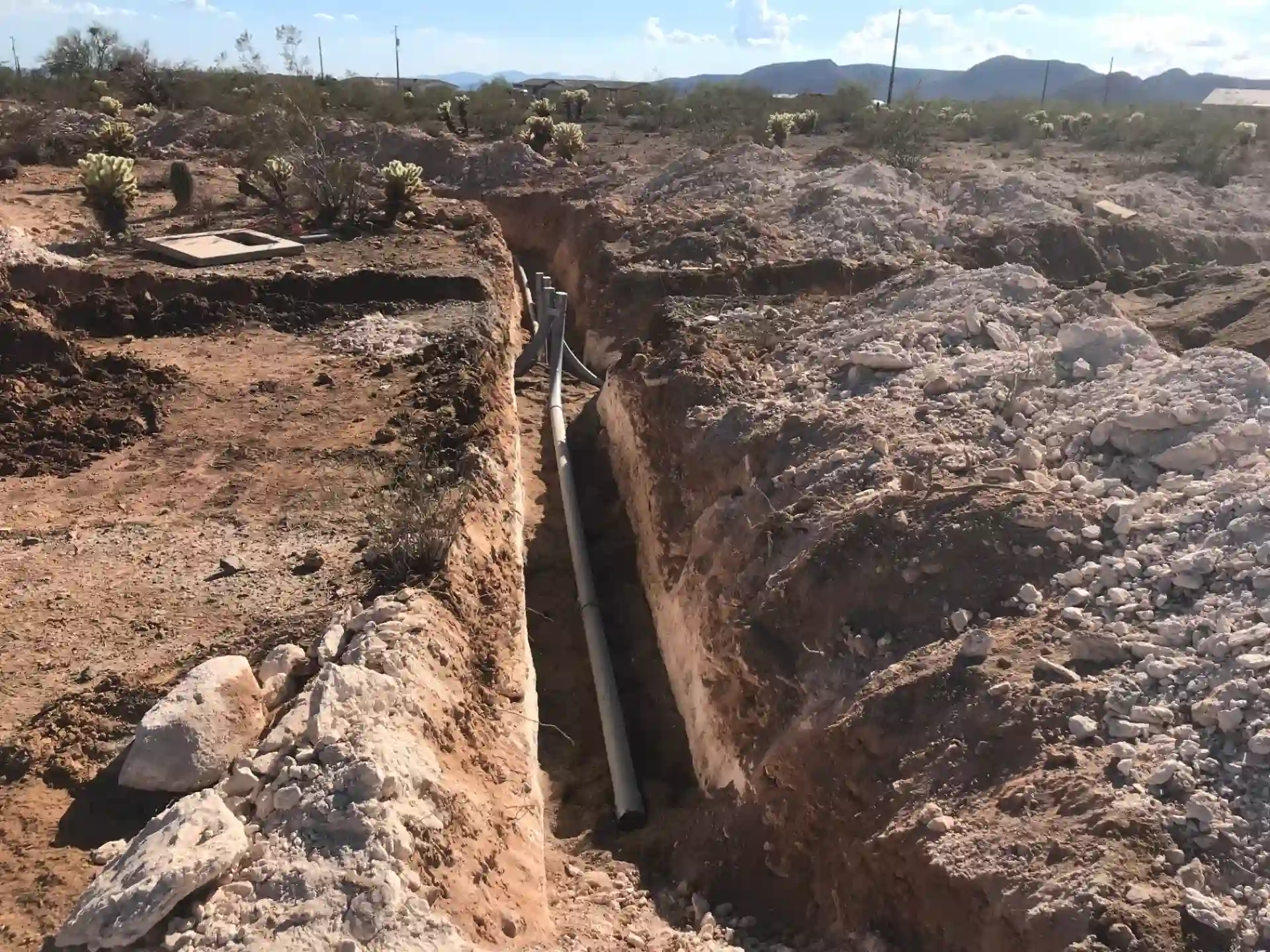
This is North Phoenix's signature problem. Caliche is a cemented hardpan layer that is nearly impermeable. Hit it above your required trench depth and you are into breaker work, and possibly a mounded or engineered design instead of a gravity field.
Failed perc, insufficient depth to bedrock, or setback conflicts
Not the end of the project. It moves you from a conventional system to an engineered alternative design (an ATU, a mound, or a pressure-dosed field) which costs more but makes the parcel buildable.
One correction to a myth I hear constantly: a perc test is not a formality you can skip because the neighbor's system works. Percolation can change dramatically across a single acre. I have dug lots where one corner drained like a colander and the corner 200 feet away was solid caliche at 30 inches.
What Drives Septic Tank Installation Cost in Phoenix
Homeowners search "septic tank installation cost" and find national numbers that mean nothing on a Maricopa County parcel. Here is what an excavator is actually pricing when we walk your land. I am deliberately not publishing dollar figures for our own work here, because on rural lots the spread between the easiest and the hardest version of the same system is genuinely enormous, and a number I invent in a blog post is worse than no number at all.
| Cost Driver | Why It Moves the Number | How Much It Matters |
|---|---|---|
| Perc rate and required field size | Slower soil means more linear feet of trench, more aggregate, more machine hours | Very high |
| Conventional gravity vs. engineered alternative design | ATUs, mounds, and pressure-dosed systems add tanks, pumps, controls, power, and annual service obligations | Very high |
| Caliche and rock depth | Hardpan above trench depth means hydraulic breaker time and heavy wear on the machine | High |
| Distance from house to tank to field | Every extra foot of building sewer and transport line is trench, pipe, bedding, and precision grade | Medium to high |
| Setbacks: well, property lines, washes, slopes | Tight setbacks can force the field to a worse location, a longer run, or a smaller footprint that needs a different design | Medium to high |
| Site access and slope | Hillside parcels and long unimproved driveways add mobilization, spoils handling, and safety measures | Medium |
| Spoils handling | Spreading excavated material on-site is cheap. Trucking it off a rural lot is diesel, dump fees, and truck hours | Medium |
| Permitting and inspection coordination | Design review, permit fees, and inspection scheduling are real line items and real calendar days | Low to medium, but never zero |
The honest version: two neighbors on identical five-acre parcels can be thousands apart because one perc'd at a moderate rate with 8 feet of workable soil and the other hit caliche at two feet and needed an engineered design. That is not a contractor padding a bid. That is the ground.
The Anatomy of a Conventional Septic System
Knowing the parts makes every quote you receive easier to compare. A conventional gravity system on a North Phoenix lot has five pieces.
- 1Building sewer: the pipe from the house stub-out to the tank, laid at a consistent minimum slope so solids keep moving instead of settling in the line.
- 2Septic tank: a two-compartment tank where solids settle as sludge, grease and light solids float as scum, and clarified effluent leaves through an outlet with an effluent filter or baffle.
- 3Distribution box or manifold: splits the effluent evenly among the leach lines so no single trench takes the whole daily load and fails early.
- 4Leach field (drainfield): trenches or beds of washed aggregate with perforated pipe, where effluent disperses into native soil and the biomat and soil column do the final treatment.
- 5Risers, lids, and cleanouts: brought to grade so the system can be inspected and pumped without excavating the yard again.
That last one is where a lot of installers get lazy. We site the tank and risers so future pump-outs stay straightforward, no surprises five years down the road. It costs almost nothing to do at install and it is expensive to fix later.
How Long Does Septic Installation Take?
The excavation itself is fast. The calendar around it is not, and confusing the two is the number one reason new-build schedules slip. Most residential systems take 3–5 days from excavation to backfill, weather permitting. Everything before and after that is paperwork and inspections.
| Phase | Typical Duration | Who Controls It |
|---|---|---|
| Site walk and scope | 1 visit | Us. We come out, walk the parcel, and look at access, slope, well location, and setbacks |
| Perc test and soil evaluation | Scheduling-dependent | Licensed tester. We recommend testers and meet them on site |
| Design and permit application | Scheduling-dependent | Designer and Maricopa County. We coordinate the designer and the inspector so you're not chasing five trades |
| Excavation, tank set, field install, backfill | 3 – 5 days | Us, weather permitting |
| County inspection and final cover-up | Inspection-dependent | Maricopa County. We stay on the job through final sign-off |
If you are building on raw land, start the perc test as early as you possibly can. It is the long lead item, it gates the design, and the design gates the permit. On a September start, getting the perc done now is what keeps a spring foundation pour realistic.
Septic Is Rarely the Only Thing the Lot Needs
On a raw parcel, the septic system is one of three or four underground scopes that all want the same trenches, the same machine, and the same week. Bundling them is cheaper and faster than sequencing three separate contractors across three separate mobilizations.
- Water service, electric, and low-voltage conduit from the road or well to the house, same open trench, one backfill, one compaction pass.
- The building pad itself, cut and compacted to the engineer's spec before any concrete is scheduled.
- Driveway and access improvements so the pumper truck, the concrete trucks, and the county inspector can all actually reach the site.
- Grading and drainage around the pad and the leach field, so monsoon sheet flow never saturates the drainfield or scours the cover.
That last point matters more in Arizona than people expect. A leach field that sits in the path of monsoon sheet flow will stay saturated when it needs to be dry. Our septic system installation page walks the full scope including permitting, and the underground utilities trenching page covers the water, sewer, and conduit that share those trenches. If your parcel drains toward the house or the field, read the Phoenix grading and drainage guide before the next monsoon season, the fix is much cheaper before the tank is buried.
How We Staff a Septic Job
We stay intentionally lean on purpose. I run the equipment on every project and bring in extra help as the scope demands. There are no project managers between you and the operator, and no subbed-out crews showing up in unmarked trucks. When we hit caliche at 30 inches or find an unmarked line, the person making the call is the person who quoted the job and is sitting in the machine.
License
Arizona ROC #351996, licensed, bonded, and insured, in both Residential and Commercial classes. It appears on every proposal we send, and it should appear on every proposal you receive from anyone.
Experience
Founded 2004. 16+ years in construction, 10+ years running excavation equipment. Former licensed residential General Contractor.
Service area
North Phoenix and the surrounding North Valley: Scottsdale, Troon, Cave Creek, Desert Hills, New River, Black Canyon City, and Flagstaff.
Hours and payment
Monday through Friday, 7:30 a.m. to 4:30 p.m. We accept check or cash.
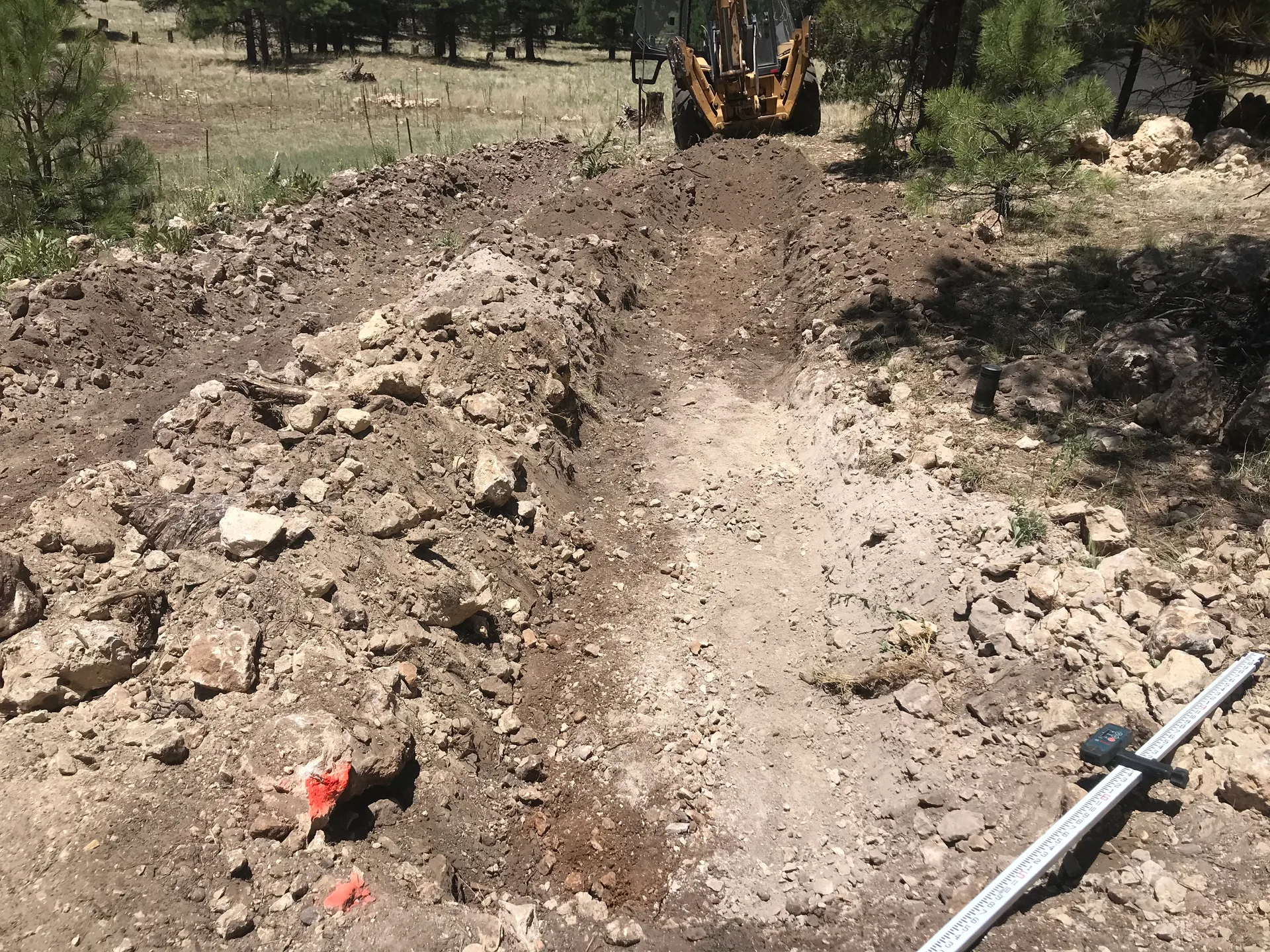
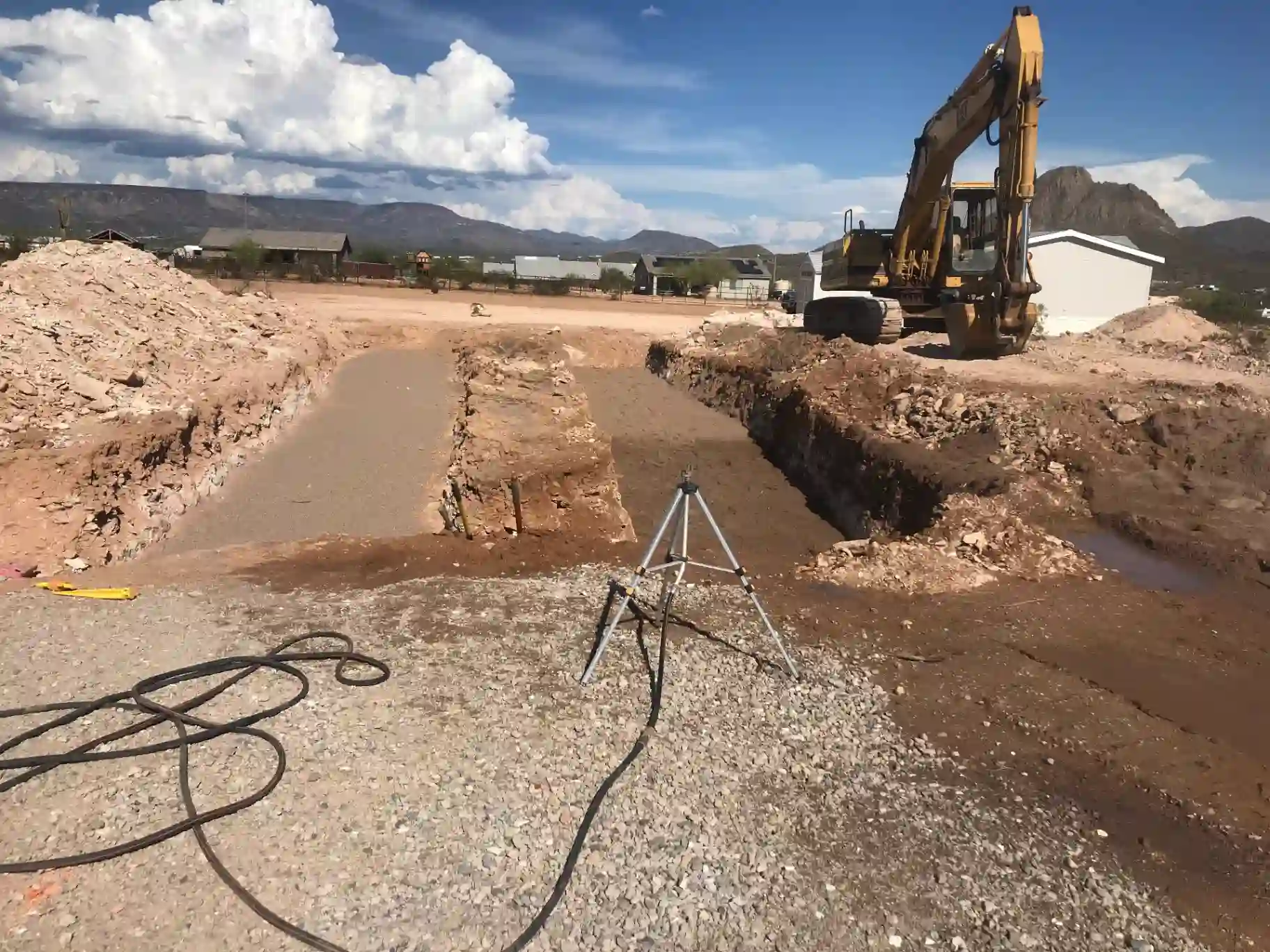
Recent septic and utility work on real North Valley lots is in our excavation project gallery, tanks set, leach trenches cut to grade, and building sewer laid before backfill.
Frequently Asked Questions
Do I need a perc test before you can quote septic installation in Phoenix?+
Usually yes. The percolation result drives the system size and design, and without it any number is a guess. We can recommend testers and meet them on site so the test happens on the right part of the parcel.
How long does a septic install take?+
Most residential systems take 3 to 5 days from excavation to backfill, weather permitting. The perc test, design, permit, and county inspection sit outside that window and are usually what determines your actual start and finish dates.
What drives septic tank installation cost the most?+
The perc rate and the resulting field size, followed by whether the design has to be an engineered alternative instead of a conventional gravity system. After that, caliche depth, the distance from house to tank to field, setbacks, and access. We price the specific parcel after a walk and the design, not off a template.
What happens if the lot hits caliche or the perc test fails?+
Neither one kills the project. Caliche above trench depth means hydraulic breaker time and a longer schedule. A failed perc or insufficient soil depth moves you to an engineered alternative design such as an ATU, mound, or pressure-dosed field. It costs more, but it makes the parcel buildable.
Do you handle the design and the county permitting, or just the digging?+
Both. We install to your designer's plan, or we assist with the design ourselves on simpler conventional systems. We coordinate the perc test, the designer, and the Maricopa County inspector, and we stay on the job through final sign-off instead of disappearing after the dig.
Can you replace an existing failed septic system?+
Yes. We locate the existing tank and field, abandon them per code, and install the new system in the best available location on the lot given your setbacks and soil.
Can you trench the water and electric while you are out there for septic?+
Yes, and it is the cheaper way to do it. Water, sewer, electric, and low-voltage conduit share the same open trench and the same backfill and compaction pass. One mobilization beats three.
Request a septic installation quote
Call or text 602.550.0790, or send the parcel details through our contact page. Andy will walk the land with you, tell you honestly what the soil is likely to do, and get the perc test moving so your build stays on schedule. Licensed, bonded, and insured, Arizona ROC #351996.
Two Ways to Get Started
Request a Site Assessment
Tell us where the water is going wrong. We'll walk the lot, laser-check the grade, and give you a straight answer on what it takes to fix it before the next monsoon.
Call the Owner Directly
Owner-operated means the person you call is the person running the machine on your property. No call centers, no runaround.