House Demolition in Phoenix, AZ: Permits, Process & Site Preparation
Planning a house demolition Phoenix AZ? Learn the real timeline, permit requirements, utility disconnect rules, and site prep needed for a clean build.
Taking down a home looks like a heavy equipment job, but the physical demolition is the shortest phase of the entire project. The excavator is on your lot for two or three days. The actual process of getting that machine legally cleared to rip into the structure takes four to eight weeks. If you are preparing for a house demolition Phoenix AZ project, you must understand the paperwork, the utility disconnects, and the site preparation that happen before the first wall falls.
I am Andy Mitchell, owner and operator of AB Mitchell Excavating. Before running dirt work full time, I was a licensed residential General Contractor. I also spent years as a construction foreman on massive commercial projects. I know exactly what the next builder needs to see when they show up to pour the new foundation. A professional demolition contractor does not just haul away the old house. They leave you with a clean, compacted, buildable pad ready for construction.
The Real Timeline for House Demolition in Phoenix
Most property owners assume they can pull a permit on a Monday and start tearing the house down on a Friday. Maricopa County and the City of Phoenix do not work that way. Tearing down a home involves strict environmental and safety regulations. Here is the realistic schedule for a residential demolition Phoenix AZ project.
Phase 1: Asbestos testing and reporting (2 to 3 weeks) You cannot skip this phase. A certified inspector must test the property, and the lab needs time to process the samples.
Phase 2: Utility disconnects (2 to 6 weeks) The power and gas companies work on their own schedules. You are completely dependent on their availability to physically cut the service lines.
Phase 3: County notifications and city permits (2 weeks) Maricopa County requires a mandatory 10 working day waiting period after you file your environmental notification. The city will issue the actual demolition permit once all clearances are in place.
Phase 4: Structural demolition (1 to 3 days) We bring in the heavy equipment. The excavator tears down the roof, the walls, and pulls up the concrete slab.
Phase 5: Site grading and compaction (1 to 2 days) We fill the voids left by the foundation, level the lot, and compact the soil.
Maricopa County NESHAP Rules and Asbestos Testing
Before you can apply for a demolition permit in Phoenix, you must satisfy the Maricopa County Air Quality Department. The National Emission Standards for Hazardous Air Pollutants (NESHAP) apply directly to residential teardowns.
You must hire an AHERA certified inspector to test the house for asbestos. The inspector will pull physical samples from drywall mud, floor tiles, popcorn ceilings, roofing mastics, and exterior stucco. If the house tests positive for asbestos, a licensed abatement contractor must remove the hazardous materials under strict containment. This must happen before our excavators arrive.
Even if the house tests completely clean, you still have to file a NESHAP notification with Maricopa County. The county mandates exactly 10 working days to process this notification. You cannot legally touch the structure during those 10 days. Fines for ignoring NESHAP rules run into the tens of thousands of dollars.
Utility Disconnects Are the Biggest Bottleneck
You cannot demolish a house with live power lines or pressurized gas pipes on the property. Disconnecting the utilities sounds like a simple phone call, but it is the most common reason demolition projects stall.
Electrical Power (APS or SRP)
You must request a permanent disconnect and a physical meter removal. You cannot just turn off the breaker. The power company will send a crew to physically cut the overhead drop from the pole or pull the underground lines back to the transformer box. Coordinating their schedule requires patience and advance planning.
Natural Gas (Southwest Gas)
The gas company must remove the meter and permanently cap the service line at the property boundary or the street. Hitting a live natural gas line with a 20 ton excavator is a massive safety hazard. We will not start the machine until we have visual proof the gas line is dead.
Water and Sewer (City of Phoenix)
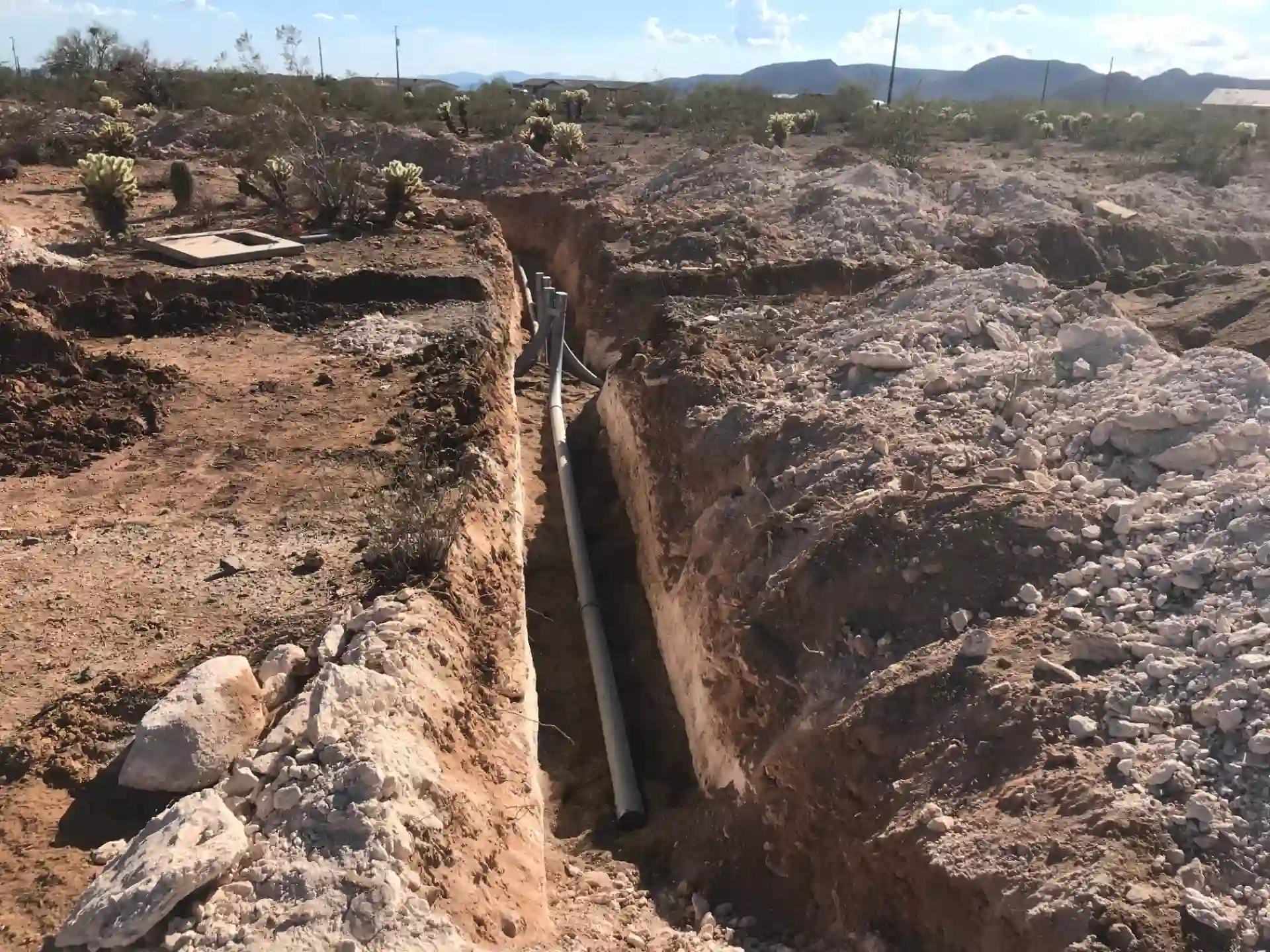
You need the city to shut off the water at the main meter. More importantly, the sewer line must be capped correctly. If you crush the old sewer pipe and leave it open, dirt and construction debris will wash directly into the city sewer main. The city inspector will check the sewer cap before signing off on the demolition final.
What Drives Residential Demolition Costs in Phoenix
Search online for a house demolition Phoenix cost estimate and you will find broad national averages. Those numbers ignore local dump fees, tight Arcadia lot lines, and hard desert soil conditions. Tearing down a standard 2,000 square foot house in Phoenix typically runs between $15,000 and $30,000. Several specific variables dictate the exact price of your project.
| Cost Driver | What It Means | Impact on Price |
|---|---|---|
| Asbestos Abatement | Removing hazardous materials before demolition begins. | High. Abatement requires specialized manual labor, containment, and expensive hazardous disposal fees. |
| House Size and Stories | A single story block home comes down fast. Two story homes require larger equipment and careful dismantling. | Medium. More square footage equals more tonnage to haul away to the landfill. |
| Foundation Type | Most Phoenix homes sit on simple slab foundations. Deep footings or rare basements require heavy breaker work. | Medium to High. Breaking thick concrete takes extra machine hours and creates incredibly heavy loads. |
| Disposal and Trucking | A standard house generates 40 to 60 roll off dumpsters of debris. | High. You pay for the truck time, the diesel fuel, and the landfill tonnage fees. |
| Lot Access | Tight central Phoenix lots with mature trees and narrow streets limit equipment size and slow down truck loading. | Medium. Open lots allow faster cycle times for the dump trucks. |
Protecting the Neighbors and Controlling Dust
Homes in neighborhoods like Arcadia, Coronado, and North Central Phoenix sit close together. You cannot just swing an excavator indiscriminately. We have to protect existing block walls, the neighbor's roof, and mature landscaping. We strategically pull the structure inward, dropping the walls into the footprint of the house rather than letting debris fall outward.
Phoenix is extremely strict about dust control. Crushing drywall and old framing in the desert heat creates a massive particulate cloud. The Maricopa County Air Quality Department will shut down a job site immediately for fugitive dust.
We run high volume hoses directly off the municipal supply. An operator constantly sprays the structure as the excavator tears it down. The debris pile must remain completely saturated while we load it into the end dump trucks. If the wind picks up beyond a safe threshold, we pause the job. Dust control is a strict legal requirement.
Managing the Foundation and the Dirt Below It
Demolishing the walls and the roof is the easy part. The real work happens at ground level. A residential demolition is not finished until the site is ready for the new build.
Slab and Footing Removal
We use an excavator equipped with a hydraulic thumb to peel up the concrete slab and pull out the underground footings. All of this concrete must be hauled to a recycling facility. We meticulously separate the clean concrete from the wood and drywall debris. Mixing trash with concrete drastically increases landfill fees, so we sort the materials on site to keep your costs down.
Compacting the Footprint
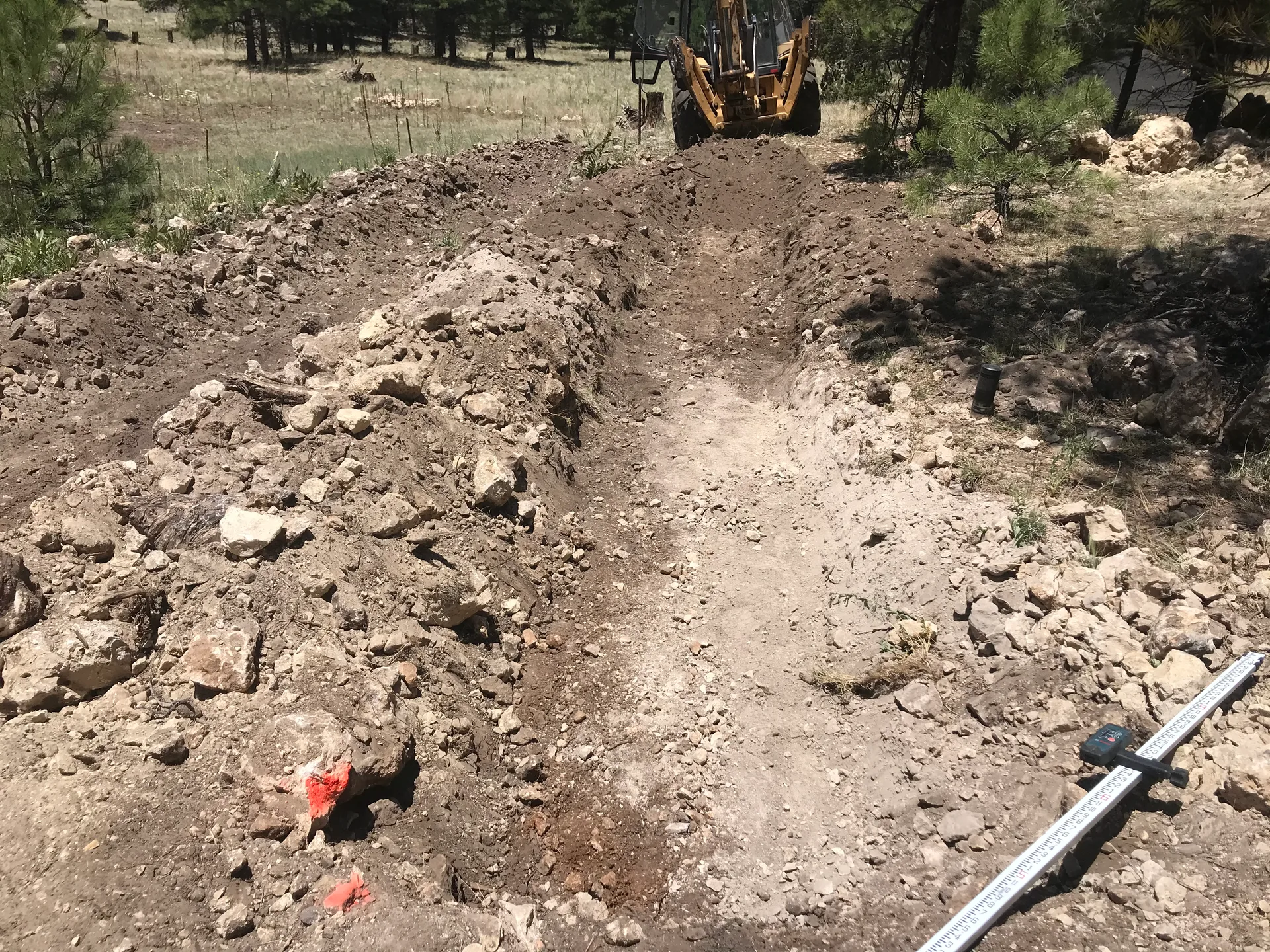
When you pull out a foundation, you leave massive voids in the ground. If a demolition contractor just kicks loose dirt into those holes and drives away, the new house will settle and crack. As a former General Contractor, I know how critical the subgrade is. We import clean fill dirt if necessary, level the entire site, and compact the soil. The finished lot will look like clean, flat dirt, ready for the surveyor to stake the new foundation.
FAQ About House Demolition in Phoenix
Do I need a permit to demolish a house in Phoenix? Yes. You need a specific demolition permit from the City of Phoenix Planning and Development Department. Before the city issues that permit, you must secure utility disconnect clearances and complete your NESHAP notification with Maricopa County.
Can I leave the existing foundation to use for the new house? Almost never. The existing footings were poured for a specific floor plan and a specific load distribution. A new house requires new plumbing trenches and entirely different structural supports. The old slab and footings must be completely removed.
What happens to the existing swimming pool? If the property has a pool that you do not want to keep, it must be demolished properly. We break large holes in the bottom of the pool shell so groundwater can drain. We then cave in the upper walls and backfill the void with engineered dirt. You must disclose a buried pool to future buyers, so removing the entire shell is often the better long term choice.
Do I need to hire a separate company to haul away the debris? No. A professional excavation contractor handles the entire process. We operate the heavy equipment to tear the house down, and we coordinate the end dump trucks and roll off bins to haul the debris to the landfill and concrete recycling plants.
Get a Real Assessment for Your Phoenix Demolition
Do not sign a contract with a company that quotes a demolition job without checking your lot access, your foundation type, and your utility layout. You need an excavation contractor who understands exactly what the next builder expects to see when they take over the site.
AB Mitchell Excavating brings the right heavy equipment, clean execution, and an owner who runs the machine himself. We handle the structural tear down, the concrete removal, and the final site grading so your new construction project starts on a solid baseline. Call us to discuss your property and get a straightforward assessment of what your demolition will require.
Two Ways to Get Started
Request a Site Assessment
Tell us where the water is going wrong. We'll walk the lot, laser-check the grade, and give you a straight answer on what it takes to fix it before the next monsoon.
Call the Owner Directly
Owner-operated means the person you call is the person running the machine on your property. No call centers, no runaround.