Sewer Line Excavation in Phoenix, AZ vs. Trenchless Repair
Comparing sewer line excavation in Phoenix, AZ vs. Trenchless repair. Learn the true costs, access challenges, and when a traditional dig is the only real fix.
A failing sewer line does not fix itself. You have raw sewage backing up into your guest bathroom, foul odors in the yard, and a main line that requires constant augering just to keep the water flowing. You need a permanent solution. The industry offers two primary ways to replace a broken pipe. You can dig up the old line, or you can attempt to reline it in place.
I am Andy Mitchell. I own and run AB Mitchell Excavating, and I operate the machine on every job we do. We handle the heavy dirt work for property owners across the North Valley. This guide breaks down what sewer line excavation Phoenix AZ homeowners actually need, how it directly compares to trenchless repair, and the exact factors that dictate which method will work for your property.
Sewer Line Excavation in Phoenix, AZ vs. Trenchless Repair Explained
When a camera inspection reveals a shattered pipe, severe root intrusion, or a belly holding water, you face a choice between two distinct repair methods.
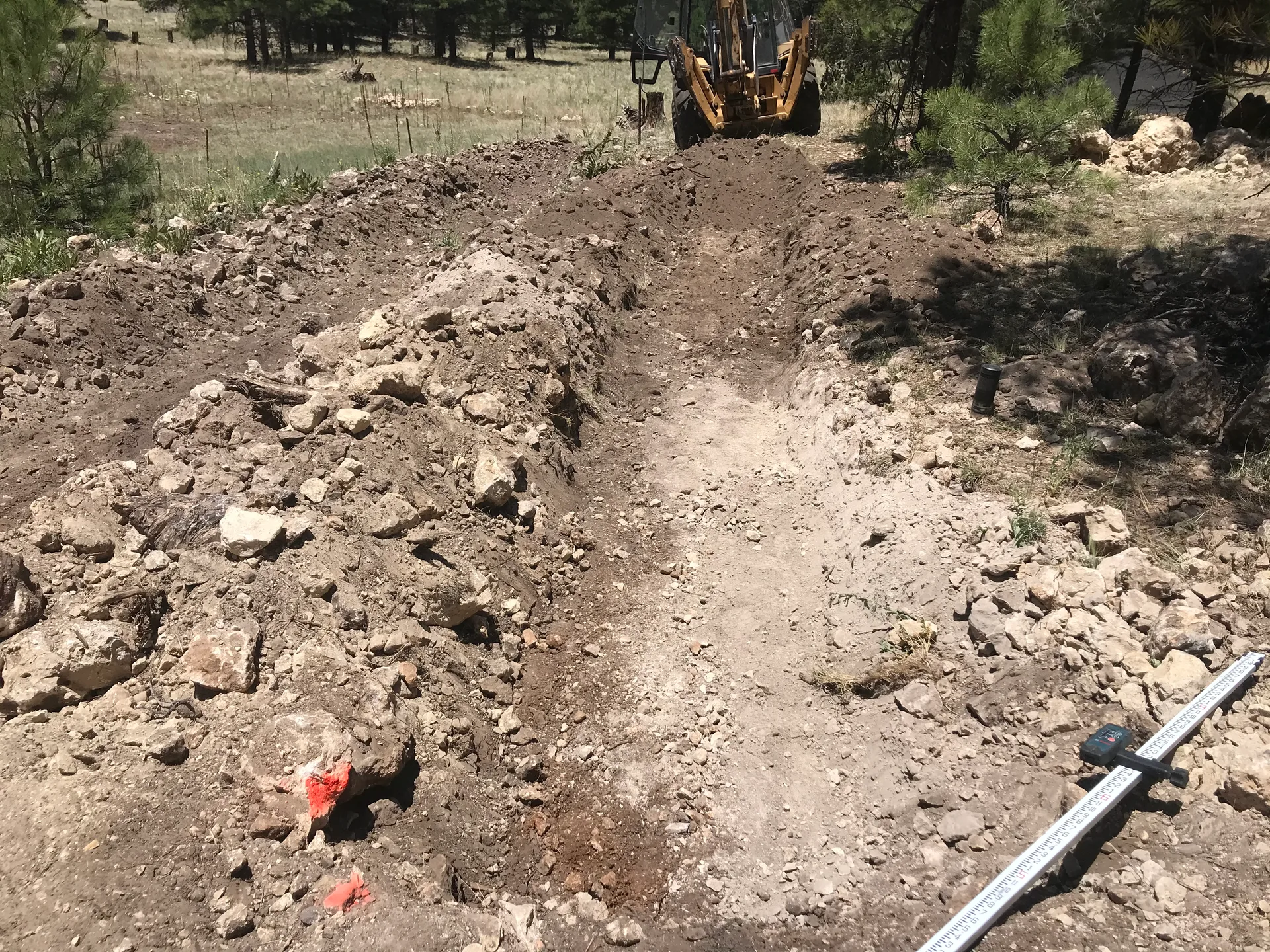
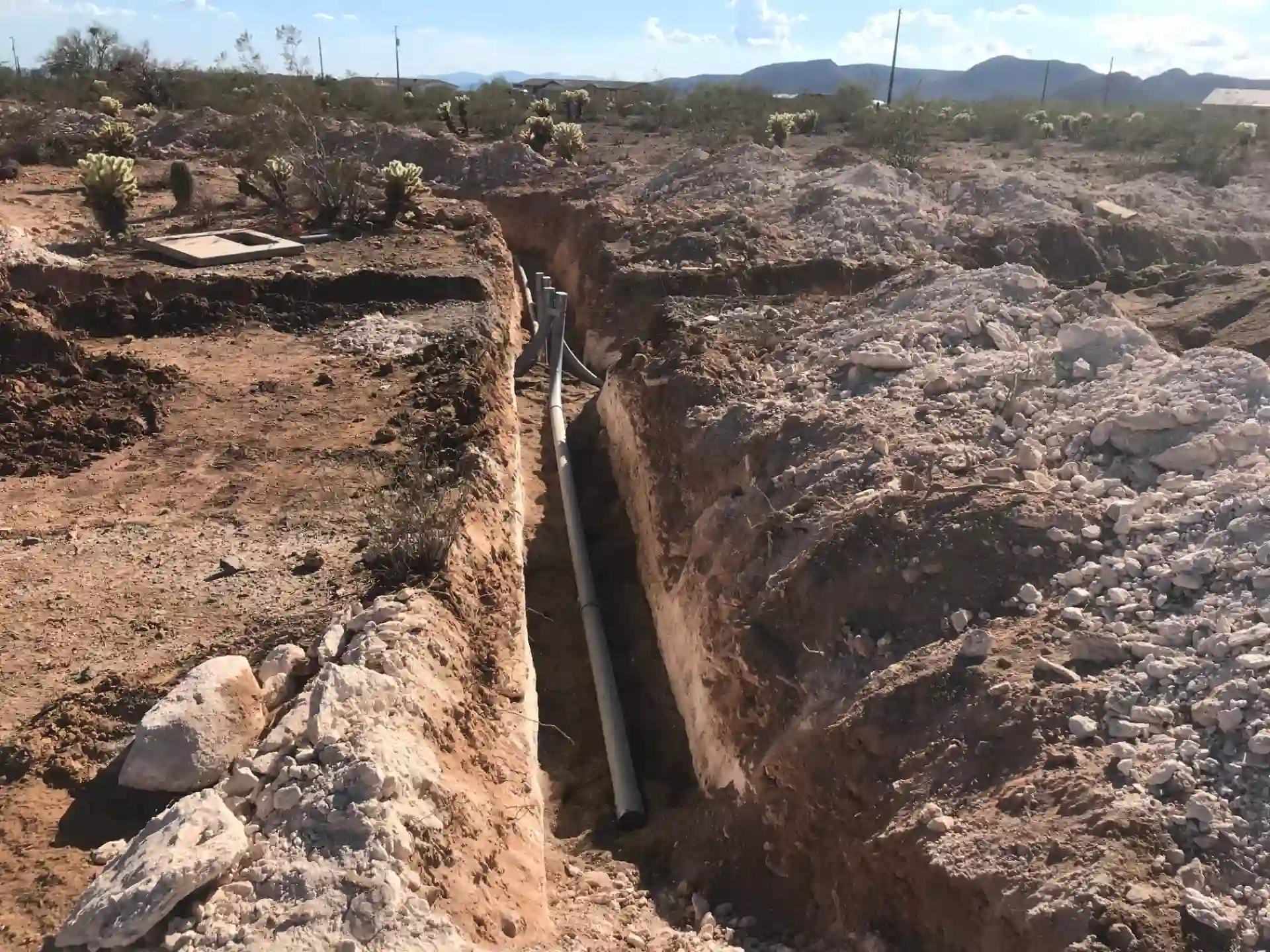
Traditional open trench excavation is exactly what it sounds like. We bring in a mini excavator, dig a trench from the side of your house out to the city tap or your septic tank, and physically remove the compromised pipe. We lay down a solid bed of aggregate, install thick Schedule 40 PVC pipe, set a precise downward slope, and then backfill and compact the soil. This is a total replacement of the system.
Trenchless repair aims to rehabilitate the pipe without digging a massive trench. The most common method is Cured-In-Place Pipe (CIPP) lining. A contractor cleans out the existing line, pushes a flexible liner soaked in epoxy resin into the pipe, inflates it, and cures it with heat or UV light. The result is a new plastic pipe built directly inside the old one. Another trenchless method is pipe bursting, which pulls a conical steel head through the old line to break it apart while dragging a new high-density polyethylene pipe into the resulting cavity.
Both methods solve plumbing failures, but they solve very different types of failures.
The Real Appeal of Trenchless Sewer Repair in Phoenix
The primary selling point for trenchless sewer repair Phoenix plumbing contractors pitch is surface preservation. Digging a trench destroys whatever sits on top of the pipe. If your sewer line runs through a dirt side yard, the surface damage is negligible. If your sewer line runs directly under a custom paver driveway, an expensive block retaining wall, or a mature mesquite tree, destroying the surface becomes a massive financial penalty.
Trenchless technology prevents that destruction. CIPP lining usually only requires a single access pit. Pipe bursting requires an entry pit and an exit pit. The middle of the line remains untouched from the surface. You avoid the cost of hiring a concrete contractor to pour a new driveway or a mason to rebuild your perimeter wall.
However, trenchless repair has a rigid prerequisite. The host pipe must still possess its basic structural integrity. A resin liner relies entirely on the shape of the existing pipe to form correctly. If the pipe is heavily compromised, trenchless methods fail.
When Traditional Sewer Line Replacement Phoenix Properties Demand is Required
Trenchless technology has hard limits. We constantly get calls to dig up lines that pipelining crews walked away from. Here is when you need a traditional open trench excavation to achieve a permanent fix.
Bellies and Sagging Lines
Desert soil settles over time, especially if water gets under the foundation or the original builder did a poor job compacting the trench dirt. When the soil settles, the pipe drops with it, creating a low spot known as a belly. Water and waste pool in this low spot instead of draining to the street. Solids drop out of suspension, and the pipe clogs rapidly.
Pipelining cannot fix a belly. A flexible liner strictly follows the existing contour. If you line a sagging pipe, you simply create a smoother sagging pipe. The puddle remains, and the backups will continue. The only way to fix a belly is to open the ground, remove the old pipe, re-grade the trench bottom, and lay new pipe at the correct angle.
Collapsed Walls and Severe Offsets
Older Phoenix homes often rely on cast iron or clay sewer lines. Cast iron rusts out from the bottom, creating a jagged trench where the pipe floor used to be. Clay pipes crack and shift at the joints, creating severe offsets. If a pipe wall has completely caved in, or if two pipe sections have shifted so far that they no longer align, a liner cannot pass through the gap. You have to dig it up.
Massive Root Destruction
Small roots can be cut out with an auger or a hydro-jet before lining a pipe. However, if a massive ficus tree root has wrapped around the pipe, crushed it, and filled the cavity with a dense root ball, clearing the line for a liner becomes impossible. An excavator is required to physically rip the root mass out of the ground and replace the shattered section.
Comparing the True Costs and Restoration Factors
Evaluating sewer excavation vs trenchless repair means looking at the total project cost. You have to factor in the plumbing bid, the dirt work, and the surface restoration. Here is what drives the final number on both sides.
Standard Cost Ranges
A standard open trench sewer replacement generally runs between $5,000 and $12,000 depending on the depth of the line, the length of the run, and the soil conditions. Trenchless lining often prices out between $150 and $250 per linear foot. If you have a short pipe run trapped under a concrete slab, lining is almost always cheaper. If you have a long pipe run through soft dirt, an excavator can often trench and replace the line for less money than a lining crew charges.
| Cost Driver | Open Trench Impact | Trenchless Impact |
|---|---|---|
| Surface Hardscape | High. Concrete and pavers must be removed and replaced at the owner's expense. | Low. Usually avoids destroying driveways, patios, and block walls. |
| Pipe Depth | High. Trenches deeper than 5 feet require shoring or benching, adding time and machine hours. | Low. The depth of the middle run does not matter, only the access pits matter. |
| Soil Conditions | High. Hard caliche rock slows down the dig and requires a hydraulic breaker attachment. | Low. Lining ignores soil entirely. Pipe bursting can struggle in solid rock if the soil will not compress outward. |
| Structural Grade | Fixes all grade issues permanently by establishing a new trench bottom. | Fails completely on poorly graded pipes. Cannot fix bellies or negative slopes. |
How North Phoenix Soil and Access Change the Dig
Before I moved into residential dirt work full time, I spent years as a construction foreman on heavy industrial sites, handling massive pipe installations and structural excavations. We originally founded this company in 2004 in Roosevelt, Utah, and relocated to Phoenix in 2021. I know exactly what happens to a pipe when the bedding is sloppy or the compaction is ignored.
When we bid a sewer excavation in North Phoenix, Scottsdale, or Cave Creek, two factors dictate the timeline and the cost.
Machine Access
A 10-foot RV gate with a straight shot to the backyard allows us to bring in a standard mini excavator and work efficiently. A 36-inch gate, an overhanging roofline, or mature landscaping traps us into using micro equipment or hand digging around sensitive areas. Tight access adds labor hours to the quote.
Caliche and Hard Rock
North Phoenix is notorious for caliche. This cemented soil layer is nearly as hard as concrete. If your sewer line is buried four feet deep in solid caliche, a standard bucket will just bounce off the rock. We have to switch to a hydraulic breaker attachment, hammer the rock into pieces, and scoop it out. This adds wear on the machine and extends the timeline of the dig.
Proper Compaction
When an open trench is backfilled, the soil must be compacted in lifts. We put a few inches of dirt in the trench, run a heavy compactor over it, and repeat the process until the trench is full. If a contractor just dumps the loose dirt back into the hole, the soil will settle heavily after the first monsoon rain. This leaves a massive sunken trench across your yard that ruins your landscaping and traps surface water. We compact our trenches properly the first time.
Frequently Asked Questions
How do I choose between sewer excavation vs trenchless methods?+
You base the decision on a camera inspection. You hire a plumber to run a camera down the line and record the footage. If the pipe is sloped correctly and structurally intact, you can line it. If the pipe has a belly, severe offsets, or a collapsed wall, you must excavate it.
How long does an open trench sewer replacement take?+
A standard residential sewer replacement in Phoenix usually takes one to three days. Hitting dense caliche rock, dealing with tight side yard access, or navigating around unmarked utility lines can push the timeline to four or five days.
Will replacing my sewer line ruin my yard?+
An open trench requires removing whatever sits above the pipe. We will backfill the trench and leave the dirt at a clean, rough grade, but you will need to hire a landscaper or a concrete contractor to replace any grass, irrigation lines, or flatwork that was removed during the dig.
Bring in the Right Equipment for the Job
If a camera inspection shows a collapsed line, a massive belly, or a shattered pipe, a resin liner will not save you. You need heavy equipment to open the ground, remove the compromised material, and fix the slope once and for all.
I run the machine on every job we take. We bring the right equipment to handle tight access boundaries, deep trenches, and the worst caliche rock North Phoenix has to offer. We set the grade perfectly, bed the pipe correctly, and compact the soil so your yard does not sink next season.
Call AB Mitchell Excavating today to discuss your property layout, your access constraints, and what it will take to replace your failing sewer line the right way.
Two Ways to Get Started
Request a Site Assessment
Tell us where the water is going wrong. We'll walk the lot, laser-check the grade, and give you a straight answer on what it takes to fix it before the next monsoon.
Call the Owner Directly
Owner-operated means the person you call is the person running the machine on your property. No call centers, no runaround.