Building Pad Excavation in Phoenix: Site Prep Cost, Compaction & Clearing
Every custom home and light commercial build in the Valley starts with dirt work nobody sees again. Here's what building pad excavation and site prep cost in Phoenix, what drives land clearing cost, how soil compaction testing actually works, and the timeline a builder should hold in the schedule.
The Pad Is the One Thing You Cannot Fix Later
October is when the Valley finally gets comfortable and fall build season goes full speed. Custom home lots that sat through the summer suddenly have a framing date, and everything upstream of that date lands on the dirt contractor. Clearing, cut and fill, moisture, compaction, final grade. It all has to be right before a single form board goes down.
Here is the uncomfortable part. Every other trade on your job can be corrected. Bad tile comes out. A crooked wall gets rebuilt. A pad built on uncompacted fill cannot be repaired without demolishing what sits on top of it. That is why builders who have been burned once care more about their building pad excavation contractor than about almost anyone else on the schedule.
I'm Andy Mitchell. I own Mitchell Excavating and I run the machines myself. Before I moved into dirt work full time I held a license as a residential General Contractor and spent years as a construction foreman on a $45 million greenfield milling and concentrator facility for Stillwater Mining Company. We founded this company in 2004 in Roosevelt, Utah and relocated it to Phoenix in 2021. Everything below reflects what we actually see on North Valley lots.
What Building Pad Excavation Actually Includes
"Site prep" gets used as one word on a bid sheet, but it is six distinct operations. When you compare quotes from dirt work contractors, compare them line by line against this list, a low number almost always means something here was left out.
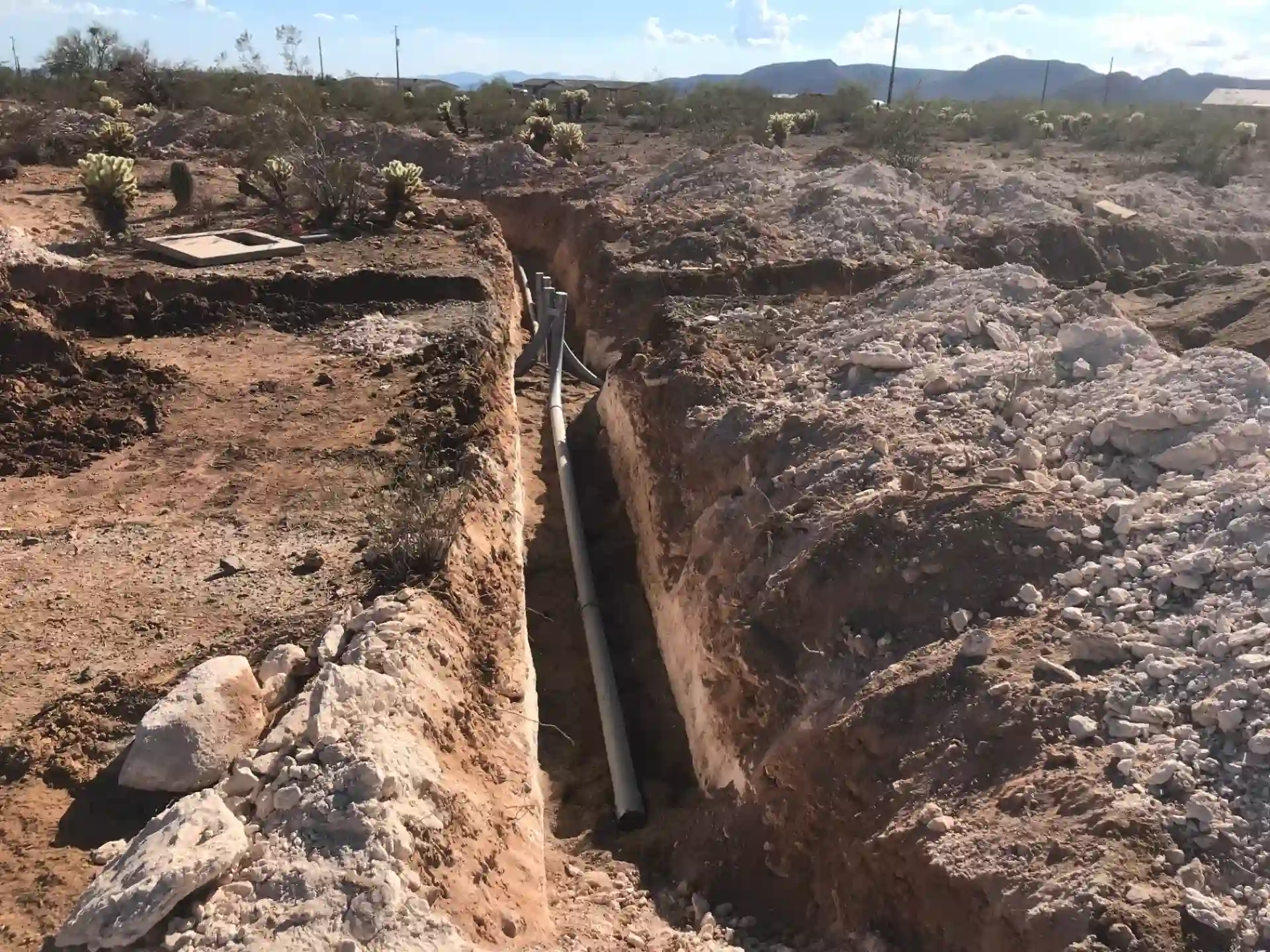
- 1Clearing and grubbing: removing brush, cactus, trees, stumps, roots, and any old concrete or debris in the footprint. Organics left in a pad decompose and settle.
- 2Stripping and stockpiling: pulling unsuitable topsoil off the building area and stockpiling reusable material somewhere it is not in the way of the framers.
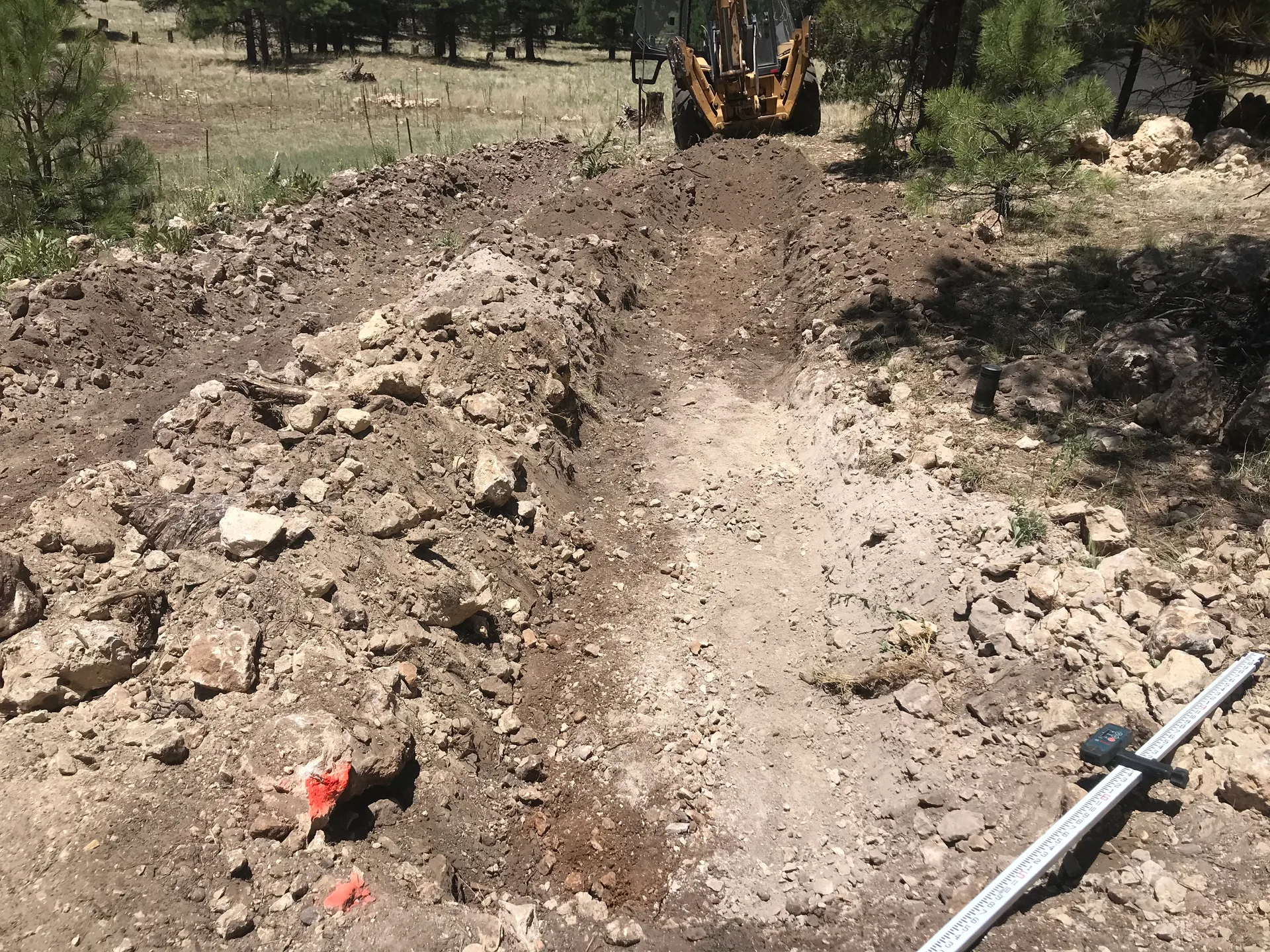
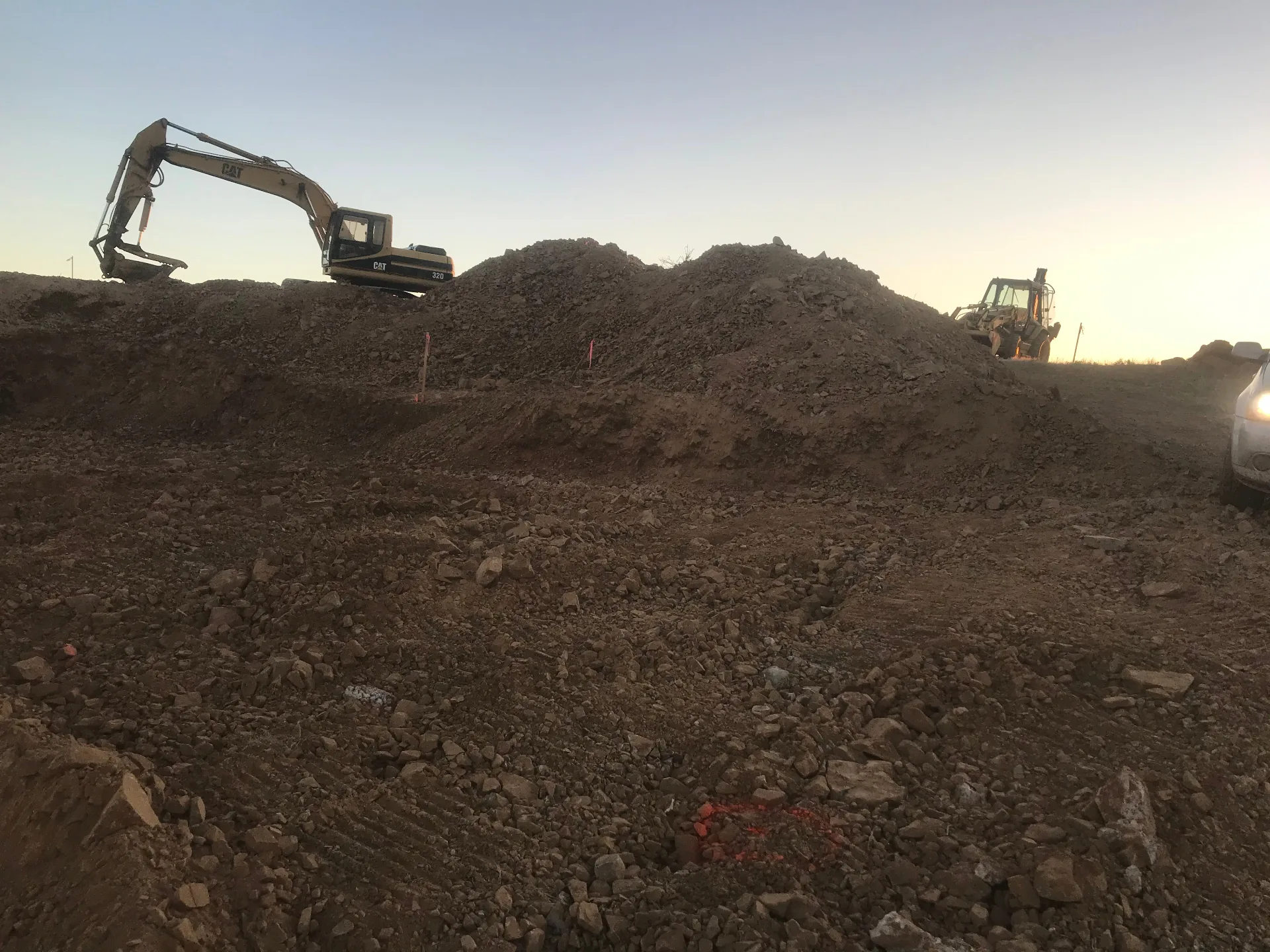
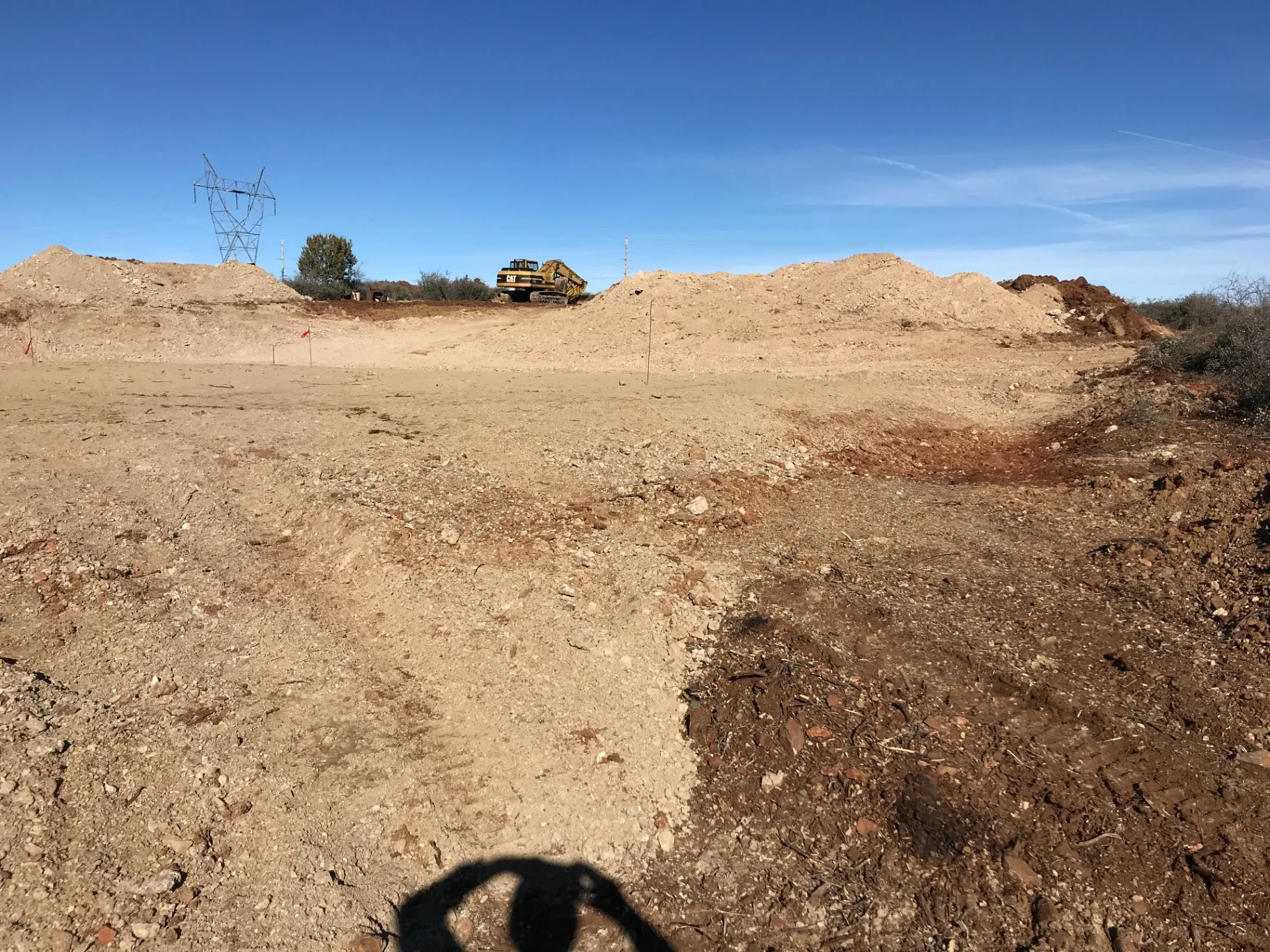
- 3Cut and fill: moving native material from high ground to low ground until the pad sits at the elevation the civil or plot plan calls for.
- 4Moisture conditioning: adding water to dry desert soil so it will actually compact. Arizona dirt at natural moisture usually will not hit spec no matter how many passes you make.
- 5Compaction in lifts: placing fill in controlled lifts and compacting each one, rather than dumping three feet of dirt and rolling the top of it.
- 6Final grade and certification: laser or GPS grade control to the finish elevation, then compaction testing to confirm the pad meets the geotechnical report.
Skip moisture conditioning or place fill in one thick lift and the pad will look perfect on inspection day and settle over the next two years. That is the failure mode nobody catches in time.
What Drives Site Prep and Land Clearing Cost in Phoenix
Builders and homeowners search "site prep cost" and "land clearing cost" and find national per-acre averages that mean nothing on a Maricopa County parcel. I am not going to publish invented dollar figures for our own work, because the spread between the easiest and hardest version of the same pad is genuinely enormous. What I can give you is exactly what an excavator is pricing when we walk your lot.
| Cost Driver | Why It Moves the Number | How Much It Matters |
|---|---|---|
| Volume of cut and fill | Machine hours scale with cubic yards moved. A sloped lot needing a benched pad moves far more dirt than a flat one | Very high |
| Caliche and hard rock | Cemented hardpan means hydraulic breaker time, slower production, and heavy wear on equipment | Very high |
| Import or export of material | A balanced site is the cheapest outcome. Hauling dirt in, or trucking spoils off, is diesel, dump fees, and truck hours | High |
| Density of vegetation and existing structures | Mature mesquite, saguaro protocol, stumps, old slabs, and buried debris all add hours before the pad work even starts | High |
| Compaction spec in the soils report | A higher required density, or fill deeper than a few feet, means more lifts, more water, and more passes | Medium to high |
| Site access | Narrow gates, long unimproved driveways, and hillside parcels change which machine can get in and how it works once it's there | Medium to high |
| Water availability for moisture conditioning | No meter on a raw lot means hauled water, which is a real line item on desert dirt work | Medium |
| Drainage and grading requirements | Pad elevation has to shed water away from the structure, which sometimes pulls in swales or additional grading beyond the footprint | Medium |
Two identical floor plans on the same street can be thousands apart because one lot balanced its dirt and the other hit caliche at 18 inches and needed material imported. That is not a contractor padding a bid. That is the ground.
Soil Compaction Testing, Explained for Builders
A soil compaction test is how everyone proves the pad will carry the structure. Your geotechnical engineer runs a Proctor test in a lab to establish the maximum dry density of the material and the moisture content that achieves it. In the field, a technician takes density readings on the finished pad (usually with a nuclear density gauge) and reports the result as a percentage of that lab maximum.
Most residential specs in the Valley call for 95% of maximum dry density, in lifts, with moisture inside a stated range of optimum. Read your soils report before bidding, because the number in that report is the number the pad has to hit, not a general rule of thumb.
Soil too dry
The most common failure in Arizona by a wide margin. Native material below optimum moisture will not densify no matter how many roller passes it gets. The fix is water and time, not more passes.
Lifts placed too thick
Compaction energy only reaches so far down. Dump a thick lift and the top tests fine while the bottom stays loose, which is exactly the layer that settles later.
Organics or debris in the fill
Roots, brush, trash, and broken concrete decompose or shift. They also make density readings inconsistent, which means retests and lost days.
Oversize rock in the fill
Cobble and broken caliche chunks bridge against each other and leave voids that no gauge reading can honestly certify.
Testing before the pad is finished
Scheduling the technician too early wastes a trip and a fee. We coordinate the test for when the pad is actually ready.
One practical note for builders: the testing lab works for you or the engineer, not for the dirt contractor. That separation is the point. A dirt work contractor who welcomes independent testing and coordinates the timing is telling you something about how he builds pads.
Cut and Fill: Balance the Site, Don't Pay Twice
The cheapest pad is one where the dirt you cut equals the dirt you need. Every yard you truck in and every yard you haul off is money that buys nothing visible. On sloped North Phoenix and Cave Creek lots, that means thinking about pad elevation before the machines show up, not after.
- Set pad elevation with drainage in mind. The pad has to shed water away from the foundation, and getting this wrong turns into the exact problem we cover in grading and drainage before monsoon season.
- Use cut material for the driveway base, pad fill, or berms instead of paying to remove it.
- Stockpile where the next trades won't have to move it, concrete, plumbing, and framing all need working room.
- Account for shrink and swell. Excavated material does not fill the same volume it occupied in place, and that math changes your import quantity.
- Decide on spoils in writing before work starts. A vague "spoils by others" clause is how a bid looks cheap and finishes expensive.
How Long Does a Building Pad Take?
The dirt work itself is usually faster than builders expect. What eats the calendar is the sequence around it, surveys, soils reports, testing, and inspections. Confusing the two is the number one reason a framing date slips.
| Phase | Typical Duration | Who Controls It |
|---|---|---|
| Site walk and scope | 1 visit | Us. We walk the lot, look at access, slope, rock, vegetation, and where the dirt can go |
| Survey stakes and soils report | Scheduling-dependent | Surveyor and geotechnical engineer. We build to their numbers |
| Clearing and grubbing | 1 – 2 days on a typical residential lot | Us, weather permitting |
| Cut, fill, moisture conditioning, and compaction | 2 – 5 days depending on volume and rock | Us, longer when caliche or imported material is involved |
| Compaction testing and final grade | Testing-dependent | Independent testing lab. We coordinate the timing and correct anything that doesn't pass |
On a straightforward residential lot, plan on roughly a week of dirt work. A light commercial site with parking, curb subgrade, and utility corridors runs longer and usually overlaps with the underground trades.
Where the Pad Ties Into the Rest of the Dirt Work
Pads rarely stand alone. On a new build, the same machine and the same mobilization can handle everything below grade, and sequencing it together saves both money and calendar days.
Land clearing and demolition
Old slabs, patios, foundations, and structures come out first. See demolition and lot clearing for concrete removal and debris hauling.
Underground utilities
Water, sewer, electric, and conduit share one open trench and one compaction pass. Details on underground utilities.
Septic on raw land
If the parcel isn't on sewer, the perc test should already be moving. We cover it in septic installation cost and perc tests and on our septic systems page.
Driveway and access
Cut material often becomes driveway subgrade, which is free base course you already paid to move once.
How to Vet a Dirt Work Contractor
If you are a builder or developer choosing an excavation contractor in North Phoenix, these are the questions that actually separate bidders.
- Licensing: ask for the Arizona ROC number and confirm bonded and insured status. Ours is ROC #351996.
- Grade control: laser or GPS, not eyeballed. Pad elevation tolerance is not a place for guessing.
- Compaction plan: ask how they condition moisture, how thick their lifts are, and how they coordinate with the testing lab.
- Spoils and import in writing: quantities and responsibility spelled out, not assumed.
- Rock allowance: a contractor who has never mentioned caliche has not worked much North Valley dirt.
- Who is actually on the machine: owner-operated means the person quoting the job is the person running it. See our completed pad and site work.
Frequently Asked Questions
How much does a building pad cost in Phoenix?+
It depends almost entirely on volume of dirt moved, rock, and whether material has to be imported or hauled off. A flat, balanced residential lot with light clearing is at the low end; a sloped lot with caliche and imported fill can be several times that. We price after walking the lot and reading the soils report, because any number given before that is a guess.
What does land clearing cost per acre in Arizona?+
Vegetation density is the driver. Sparse desert brush clears fast; mature mesquite, stumps, buried debris, and old concrete slow it down considerably. Protected native plants and disposal of debris also affect the number, so we quote by walking the parcel rather than by the acre alone.
Who is responsible for the soil compaction test?+
The independent testing lab reports to you or your geotechnical engineer, not to the dirt contractor, and that separation is the point. We build the pad to the spec in your soils report, coordinate the timing of the test so nobody wastes a trip, and correct anything that does not pass.
How long does site prep take on a custom home lot?+
Plan on roughly a week of dirt work on a straightforward residential lot: one to two days clearing, two to five days of cut, fill, moisture conditioning, and compaction, then final grade and testing. Rock, imported material, and hillside benching extend it.
What happens if you hit caliche or hard rock?+
We break it. Caliche is a cemented hardpan common across North Phoenix, and hitting it above the required grade means hydraulic breaker time and slower production. We flag rock risk during the site walk so it's a conversation before the invoice, not after.
Do you do commercial site prep as well as residential?+
Yes. We handle building pads, land clearing, and grading for custom homes, light commercial sites, and developers across North Phoenix, Cave Creek, Desert Hills, New River, Anthem, Scottsdale, and the surrounding Valley.
Request a building pad and site prep quote
Call or text 602.550.0790, or send your plot plan and soils report through our contact page. Andy will walk the lot with you, tell you honestly what the dirt is likely to do, and give you a schedule your framer can build around. Licensed, bonded, and insured, Arizona ROC #351996.
Two Ways to Get Started
Request a Site Assessment
Tell us where the water is going wrong. We'll walk the lot, laser-check the grade, and give you a straight answer on what it takes to fix it before the next monsoon.
Call the Owner Directly
Owner-operated means the person you call is the person running the machine on your property. No call centers, no runaround.